
10 steps for the culture sector to contribute to a regenerative future driven by arts and culture
01. Follow, support, and share policy developments to formally integrate the role of culture into the sustainability agenda.
Positive momentum is building to position culture as a stand-alone goal in the post 2030 Agenda. Stay updated on recent outcomes from the 2024 UN Pact for the Future and upcoming UNESCO MONDIACULT 2025 to support the integration of culture into global sustainability frameworks. Explore UNESCO reports on this topic and draw inspiration from the UNESCO Culture 2030 Thematic Indicators.
Support calls to action, such as the Culture 2030 Goal and the Climate Heritage Network who are advocating for the UNFCCC and COP to integrate art and cultural heritage into climate policy.
02. Respond to global arts audiences who are increasingly expecting awareness and responsibility from cultural organisations.
The Act Green 2024 Report (UK) showed:
 74% of audiences would view a cultural organisation more positively if it had sustainability accreditation
72% expect awareness and responsibility from cultural organisations.
03. Draw inspiration from and emulate the growing adoption of sustainability strategies by museums and cultural institutions.
Follow the lead of these global cultural institutions who were identified by a recent study as champions of environmental and social sustainability: Tate Gallery, National Gallery Singapore, Sydney Opera House, Solomon R. Guggenheim Museum, Rijksmuseum,
National Theatre of London, and Field Museum of National History among others.
04. Explore and utilise the wide array of culture-specific tools and frameworks, as well as insights from thought leaders, to support your sustainability journey.
Here are some of our favourites:
-
-
-
- Gallery Climate Coalition Carbon Calculator and Artist Toolkit
- ICCROM Our Collections Matter Self-Assessment Tool
- KiCultures Books
- Art 2030
-
-
05.Embed the approaches of internationally recognised sustainability standards and reporting frameworks.
For most cultural organisations, sustainability standards and reporting frameworks are not yet mandatory. However, they offer comprehensive, well-tested approaches and data-driven indicators aligned with global best practices, enabling the culture sector to lead by example in the transition to sustainability.
At UreCulture, we view reporting frameworks as more than just compliance tools. We recognise the opportunities they provide to lead by example and the stories they tell about doing things differently—and better—for our planet and its people.
Discover an example through our work: The TBA21 EcoSocial Impact Reports, based on the recent European Commission’s ESRS which also incorporate regenerative indicators.
06. Don’t know where to start? Begin by measuring your carbon footprint, resource usage, and waste management to establish your baseline. Grow from there.
Setting a sustainability strategy and targets for your cultural organisation, such as reducing your carbon footprint and adopting regenerative practices, can seem daunting. Conducting a baseline assessment of your key environmental impacts is a great place to start, as awareness is the first step toward meaningful change.
The simple act of acknowledging these impacts is an important step forward. The ultimate goal is to take action to mitigate negative environmental harm while maximising opportunities for regenerative impact for both nature and people.
07. The mission of the culture sector is inherently positive for people, and measuring indicators from the social dimension of sustainability can only benefit your organisation.
The well-established social sustainability indicators can provide new, data-driven, and qualitative performance metrics to enhance how you measure your cultural organisation’s impact on people.
These indicators offer evidence of how your cultural organisation is organically contributing to the social dimension of sustainability, while also highlighting areas where you may need to work further to be more inclusive, diverse, and fair to your audience, staff, and third-party supply chain. Generally, cultural agents score very high in social sustainability when conducting a first ESG assessment for their institution.
08. Embed regenerative values and approaches into your sustainability strategies and practices.
What is Regenerative Sustainability? Regeneration goes beyond the concept of sustainability and merely restoring harm. It is a net-positive approach that benefits both nature and people, with the mission to actively and altruistically create conditions for all life on Earth to thrive, while honouring complex interconnected systems.
A regenerative model within a cultural institution creates new net-positive value for both nature and people. The culture sector holds an invaluable opportunity to embed strategies that shape a new regenerative paradigm for both people and the planet.
09. Harness the opportunity to have systemic influence across the entire arts and culture ecosystem.
-
-
-
- GOVERNMENT BODIES, FUNDERS & SPONSORS – Implement governance-led policies that require cultural agents to report on sustainability performance.
- MUSEUMS & FOUNDATIONS – Implement sustainability strategies within your operating models and report annually. Influence the entire value chain—artists, partners, and service providers—to work towards achieving your sustainability goals.
- ARTISTS & CURATORS – Request that the museums and institutions you collaborate with embed sustainability in their exhibitions. You can achieve this through your policies and contract terms.
- VALUE CHAIN SERVICE PROVIDERS – Offer optional sustainability services in your project bids, even if they are not included in the RFP brief.
-
-
10. Lead by example to inspire and shift mindsets in audiences and society at large. Share your sustainability efforts to make an impact.
Transform your sustainability strategy and reporting into storytelling to harness the inherent power of the arts in shaping society and creating new regenerative paradigms.
Cultural agents are trusted by the public, and they are looked to as leaders in signaling the changes needed in our society. The culture sector, along with its agents, is presented with the opportunity and responsibility to lead by example in the most critical challenge of our time—the transition to a sustainable and regenerative future.
UreCulture can help you across each of our recommended 10 steps.
Ready to start your regenerative journey? Reach out to us if you are ready to explore sustainability in arts, implement regenerative practices, and reduce your carbon footprint to contribute to cultural sustainability
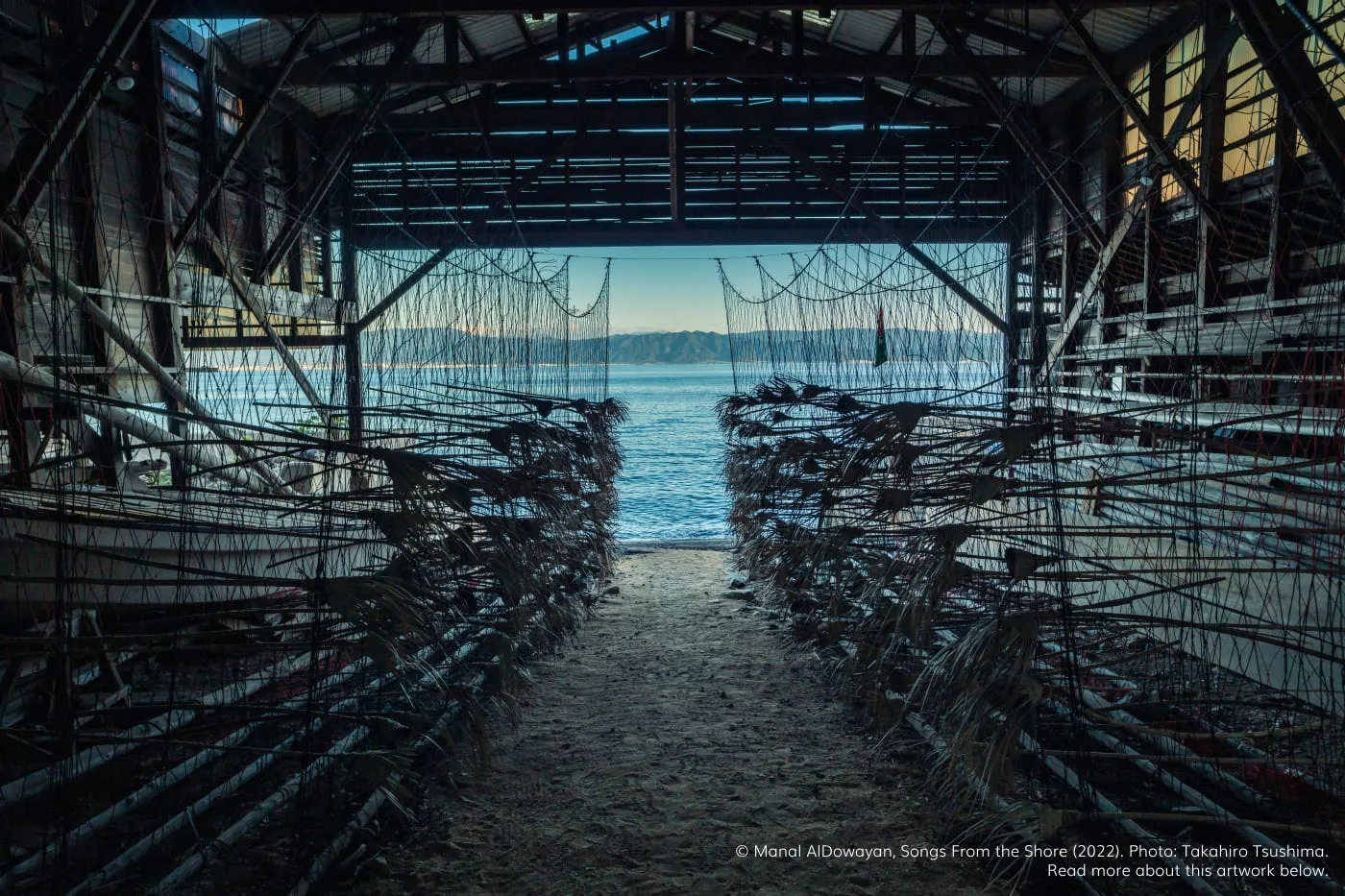
Description of the image of the artwork ‘Songs from the Shore’, by Manal AlSowayan: This installation embraces circularity by utilising reused fishing nets and involving the community of the island of Ibuki, Japan. –”It is a statement about a shared connection of love and hate that women have had with the sea over the centuries, a connection that today can translate into a concern over climate change and making an urgent gesture to our planet earth, to heal from the damages that humans have created.” – Manal AlDowayan